Short Answer: Usually no or far less than expected.
What actually happens:
- Most Ohio police and firefighters contribute to Ohio Police & Fire Pension Fund (OP&F) instead of Social Security.
- If you qualify through other work:
- Windfall Elimination Provision (WEP) can reduce your benefit.
- Government Pension Offset (GPO) can reduce or eliminate spousal benefits.
The hard truth:
Social Security is not your backup plan unless you’ve verified it with a WEP/GPO-adjusted estimate.
If you’ve never run those numbers, you’re guessing.Short Answer: It’s strong — but not complete.
What the pension does well:
- Lifetime income.
- Disability protection.
- Survivor options.
- Early retirement compared to private sector.
What it does not do:
- Guarantee inflation protection.
- Cover full healthcare costs.
- Replace 100% of working income.
- Automatically coordinate with DROP, 457, or tax strategy.
The hard truth:
A pension is foundational. It is not a full retirement plan.
Short Answer: Every year matters.
What you need to understand:
- Vesting typically begins at 10 or 15 years.
- 20, 25, and 30 years dramatically change lifetime benefit amounts.
- Early retirement permanently reduces payouts.
The hard truth:
Leaving “just a little early” can cost six figures over retirement.
You don’t make that decision casually.Short Answer: It depends on timing and taxes.
How DROP works (Ohio):
- You “retire on paper.”
- Pension payments accumulate in a DROP account.
- You continue earning a salary.
- Funds are taxable upon distribution.
What most don’t plan for:
- Tax spikes when exiting DROP.
- Poor investment election inside DROP.
- No coordination with 457 withdrawals.
The hard truth:
DROP is powerful — but without tax strategy, it can backfire.
Short Answer: Most first responders underuse it.
What makes a 457 powerful:
- Pre-tax or Roth contributions.
- No 10% early withdrawal penalty after separation.
- High contribution limits.
- Stacks on top of pension.
What goes wrong:
- Contributions start too late or are not enough.
- Poor asset allocation.
- No integration with pension income.
The hard truth:
The 457 is your flexibility tool. Ignore it, and you lose control.
Short Answer: It’s either a strategic advantage or a tax mess.
What typically happens:
- Paid outside payroll.
- No withholding.
- No retirement integration.
- No structure.
What smart structuring can do:
- Form an LLC.
- Elect S-Corp taxation if income justifies it.
- Deduct legitimate business expenses.
- Open a Solo 401(k).
- Fund 529 plans without touching retirement.
The hard truth:
Unstructured extra duty income is a wasted opportunity.
Short Answer: If you retire at 52, you might live to 85+.
What this means:
- 30+ years of income needed.
- Inflation erodes fixed income.
- Healthcare expenses rise before Medicare.
- Pension alone may not adjust enough.
The hard truth:
Longevity is the risk nobody talks about at the substation or firehouse.
Short Answer: This is where plans quietly fail.
The issues:
- Coverage gaps before 65.
- Rising premiums.
- Long-term care exposure.
- Survivor income decisions.
The hard truth:
One medical event can undo decades of discipline.
Short Answer: Yes — before you move.
What changes by state:
- Pension taxation.
- State income tax.
- Estate tax laws.
- Cost of living.
- Healthcare access.
The hard truth:
Relocation without tax planning can reduce net retirement income.
It coordinates:
- Pension timing decisions.
- Vesting analysis.
- DROP strategy.
- 457 contribution strategy.
- Extra duty business structure.
- Tax minimization.
- Healthcare and insurance.
- College planning.
- Long-term income sustainability.
Most police officers and firefighters won’t retire broke.
But many retire without a coordinated strategy.
The goal isn’t just to collect a pension.
It’s to create income that lasts, reduces taxes, and protects your family.Definitions:
Roth IRA: A Roth IRA is an individual retirement account funded with after-tax contributions that allows investments to grow and be withdrawn tax-free in retirement if IRS requirements are met.
Roth IRA limits in 2026:
- Contribution Limit: maximum of $7,500 a year.
- Catch-Up Contribution: 50 and older, the catch-up contribution limit is $1,100.
- Income Limits: To make a full contribution, your Modified Adjusted Gross Income (MAGI) must be:
- Less than $153,000 for single filers.
- Less than $242,000 for joint filers.
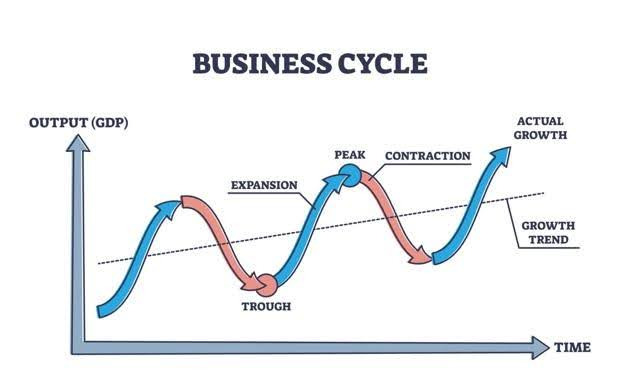
Business Cycle: The business cycle is the recurring pattern of expansion and contraction in an economy over time, measured by changes in economic activity such as production, employment, income, and spending. It typically moves through four phases: expansion, peak, contraction (recession), and trough.
Prospectus: A prospectus is a formal disclosure document that provides investors with detailed information about an investment offering, including its objectives, risks, fees, and financial data.
Life insurance: Term is cheaper and offers more coverage. Get enough to replace your income if you go to Heaven early. One-Million-dollar example: A $1,000,000 investment earning 6% annually can generate approximately $5,000 per month in income while the principal remains invested. If you have 30 years until retirement, get a 30-year term policy. Get this early while you are in great shape and the cost could potential be much less.
Rollover
A tax-free transfer of assets from one qualified retirement program to another. Rollovers must be made in accordance with specific requirements to avoid a taxable event. Move the 401(k), IRA or Roth IRA from your old employer to a new account that will meet your goals. Do it correctly so it is a tax-exempt transfer.


